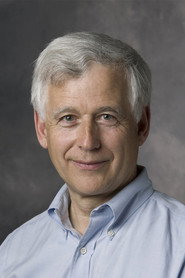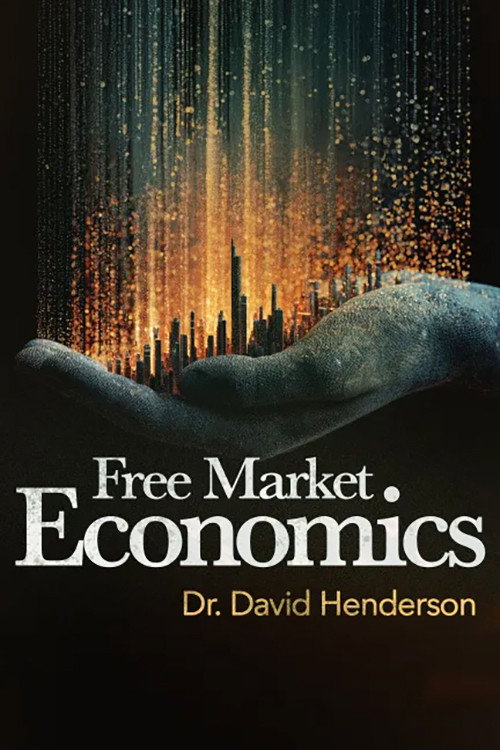
In Free Market Economics, Dr. David Henderson guides us through ten foundational pillars of economic wisdom and the major schools of thought—Austrian, Chicago, UCLA, and Public Choice. Along the way, we explore how markets coordinate through decentralized knowledge, property rights, and voluntary exchange, and why central planning so often falls short. Drawing on vivid historical cases—from the Soviet economic collapse to West Germany’s postwar miracle—the course brings core ideas like subjective value, spontaneous order, and entrepreneurial discovery to life. Ultimately, it shows how economic freedom and open inquiry fuel innovation and prosperity, while government intervention frequently produces unintended consequences and inefficiencies.

In our introductory lecture, we explore the foundations of free market economics through the first five pillars of economic wisdom and how different schools of thought explain mar…
In lecture two, we continue with pillars six through ten of economic wisdom, beginning with the idea that every action has unintended consequences, illustrated by examples like Br…
In lecture three, we study the Austrian School of Economics through the work of Carl Menger and Eugen von Böhm-Bawerk, key figures in the marginal revolution of 1871 that challeng…
In lecture four, we continue our study of the Austrian School of Economics through the work of Ludwig von Mises, Friedrich Hayek, and Israel Kirzner, focusing on economic calculat…
In lecture five, we learn about the Chicago School of Economics through the contributions of Frank Knight, Milton Friedman, George Stigler, Gary Becker, Ronald Coase, and Sam Pelt…
In lecture six, we consider the work of mainstream economists outside the Austrian, Chicago, and UCLA Schools who contributed to free market economics and critiques of government …
In lecture seven, we explore the UCLA School of economic thought, focusing on the foundational work of Armen Alchian and Harold Demsetz, along with contributions from Jack Hirshle…
In lecture eight, we go over Joel Mokyr’s Nobel Prize-winning analysis of the Industrial Revolution and the “hockey stick” pattern of economic growth that transformed human living…
In lecture nine, Dr. Henderson explains the public choice school of economics, which applies economic analysis to political behavior and shows how self-interest influences politic…
In our tenth and final lecture, we explore the West German economic miracle after World War II, showing how free market ideas transformed a devastated economy into one of the worl…
No streaming providers available.